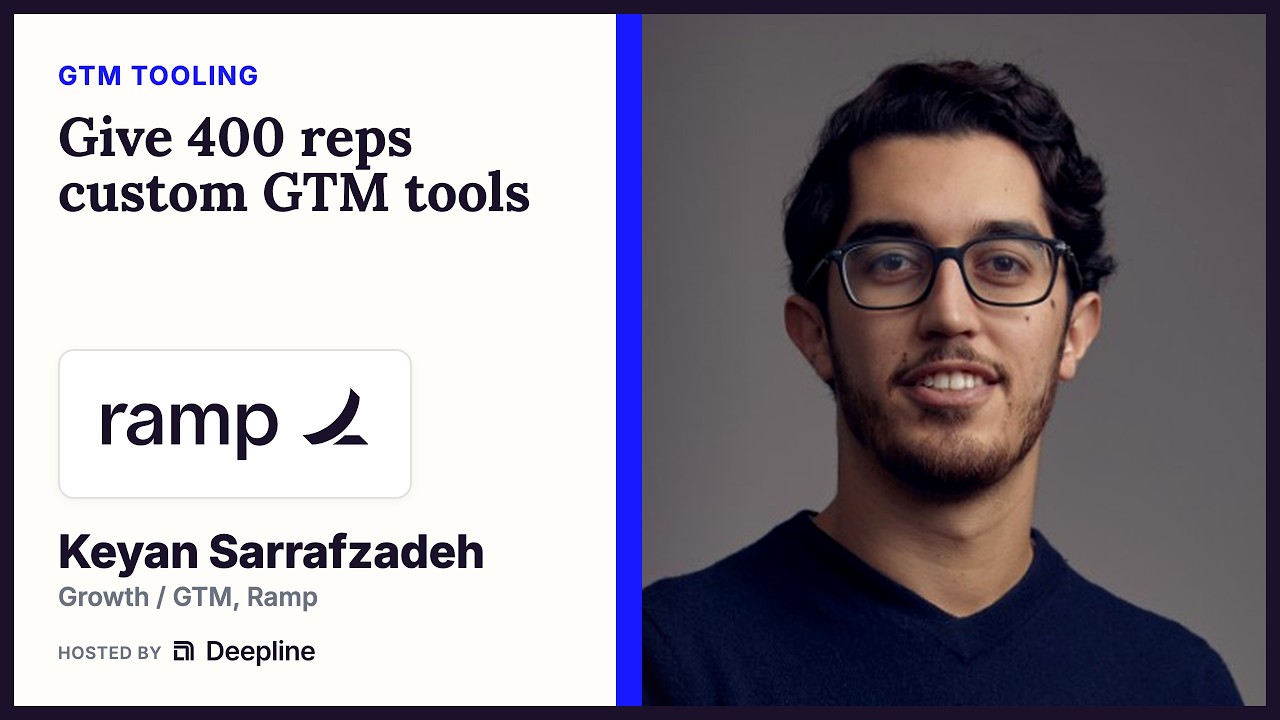
We had hundreds of salespeople at Ramp, and one team couldn't build every tool they wanted. We gave reps a way to build their own using our sales data. Then we looked at what they used to decide which tools belonged in Ramp Revenue.
Video not loading in LinkedIn or your in-app browser? Watch it on YouTube.
How prospect research became Ramp Revenue
Four or five years before this talk, we started with a small team building tools for sales development reps. These are the people who research and contact potential customers. Our automated prospecting work contributed to new business, but it also left us with something useful for the rest of the sales team.
"Inadvertently built a database of Ramp's entire TAM."
TAM means total addressable market, the set of companies we could sell to. As we researched those companies, we collected information about their businesses and the technology they used. That data could help a rep preparing for a meeting as well as one deciding whom to contact.
We built a customer data platform where people could select the companies they needed from that data. Then we launched Ramp Revenue, an app that helped reps decide where to spend their time each day.
"You log in here in the morning as an SDR, you see all the prospects that you should be focusing on, an explanation of why you should be focusing on every single one of those."
Reps could use the same app to prepare for meetings, track signs of buying interest, and follow up afterward.
How reps build their own tools
Ramp Revenue gave reps a shared app, but our team still had to decide what to build for them. Hundreds of salespeople had ideas from their own work. We wanted them to be able to try those ideas themselves.
"It doesn't take advantage of the horsepower of 300-400 salespeople who are in this building every day."
We built the growth MCP server to give reps access to the data and functions behind our sales tools. MCP stands for Model Context Protocol, a standard that lets AI apps connect to tools and data. A rep could use an AI app with our server or build a custom tool. Ramplify also let reps create web apps. They all used our existing data and permissions.
At the time of this talk, the server offered 79 tools, with more added each week. Reps used them to research prospects, prepare meeting briefs, and add information about buying interest to their records.
We also required the agent to explain why it used each tool. That gave us a way to learn from what reps were building.
"Every time an agent is making a tool call to the MCP, the agent also has to write a rationale for why that tool is being called."
We group those explanations to find repeated requests. They help us decide which tools to add to Ramp Revenue for the wider sales team.
Deciding what to keep
Reps test these tools in their daily work. We judge them by whether they save time or help reps sell. This account of Ramp's approach describes how people across the company build their own tools.
"We will only build internally if it's going to give us some sort of competitive advantage. Otherwise there's no rationale for using internal resources on that."
We still keep the main sales records in our customer relationship management system, or CRM. Reps do most of their daily work through the MCP server and web apps, using the tools that fit what they need to do.
Part of the GTM + AI NYC Lightning Talks, hosted by Deepline at Ramp HQ. The recap has all six talks.
Keyan Sarrafzadeh on LinkedIn · Ramp
More from the event: Jai at Deepline · Bryant at OpenAI · Julia at Notion · Chris at Modal · Jacob at Attention